
Overcoming the "barrier" of being a foreigner
I want to create a safe and secure environment.
2026.07.31



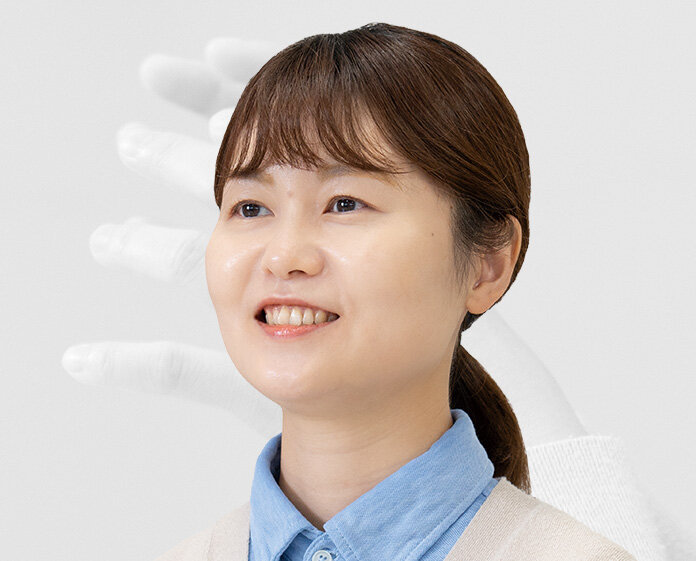
Sales Management Department, Disaster Prevention, Technology, and Public Relations Section
chief
Chen Liting氏
Ms.Chen, originally from Taiwan, plays a vital role in supporting the lives and work of foreign talent. This includes interpreting, handling procedures, and mediating between companies. Drawing on her own experiences of struggling with language and cultural barriers in Japan, she is dedicated to creating an environment where foreign talent can work with peace of mind.
Listening to the voices of those on the ground who are confused by the dialect.
What specific support do you provide as a caretaker?
Currently, I am supporting the daily lives of the Myanmar and Chinese people we are hosting. I also work as an interpreter, as I speak English, Japanese, Taiwanese, and Chinese, and I help with visa renewals and skills training procedures. I also act as a confidant for work-related concerns, and I have even stepped in to mediate between them and their companies when they expressed difficulties, such as saying, "I'm not comfortable with that particular work site..."
Ms. Chen is from Taiwan. What are some of the biggest challenges foreigners face when working in Japan?
It varies from person to person, but if I had to pick one thing, it would be the dialect. I struggled quite a bit at first too. Many people from Kochi Prefecture speak Tosa dialect, and I remember hardly being able to understand what they were saying. Even now, I still hear from people who have been accepted that "the Japanese they studied is completely useless."
Behind the words that don't get across, there are feelings that you want to convey.
What are some of the most common issues people come to you for advice on?
A surprisingly common cause of misunderstanding is "loud shouting." For example, imagine a foreign worker who doesn't yet fully understand Japanese working on a construction site and encounters a situation where they need to be careful. In such a situation, the foremen might shout "Watch out!" or "Be careful!" to ensure safety. However, the foreign worker doesn't understand why they were being yelled at. They might think, "I didn't do anything wrong, but I'm being scolded."
From a Japanese perspective, they warned because it was dangerous, right?
That's right. If they wander into a dangerous area, I might grab their clothes or their hands. However, they might mistake that for violence. In those cases, I step in to mediate and let them talk it out themselves. By resolving the misunderstanding, we can work together again without any lingering resentment.
Are there any things you pay particular attention to when communicating?
Perhaps it's a difference in personality due to culture. When I observe the Myanmar employees working at our company, they are incredibly patient. Even when they have problems, they often don't voice them. When I did reach out to them, they sometimes confided that they had been going through a tough time at work and had "cried." That's why I try to build close relationships with them and create an environment where they feel comfortable talking to me.
To overcome the barrier of "being a foreigner"
Are there any aspects of working in Japan that make it difficult to work here?
Yes, I did. I came to Japan to study, and at first I felt a barrier between myself and the Japanese. This is because many Japanese people keep their distance when they realize you're a foreigner. In the workplace, that distance sometimes makes work difficult. I felt like I had to work twice as hard as the Japanese to be accepted.
How did you overcome that "obstacle"?
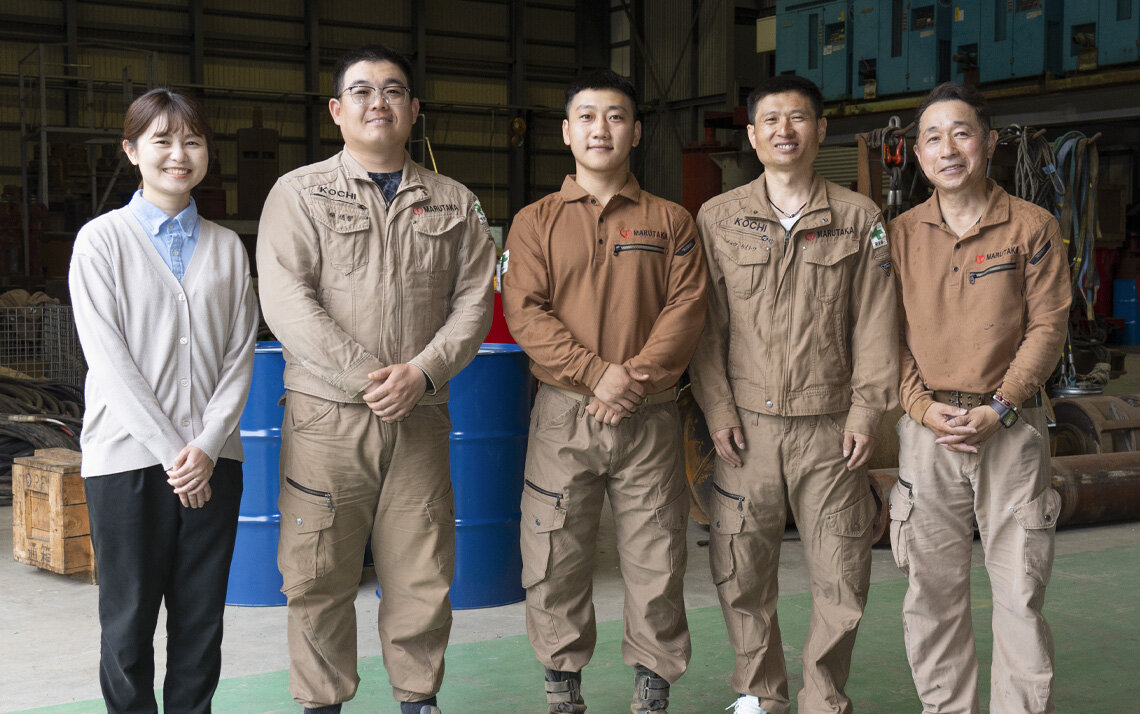
I made sure to communicate as much as possible. Instead of working silently on my own, I made an effort to bridge the gap by asking questions about things I didn't understand and actively joining conversations. Conversation is really important. Our foremen also get along really well with the Chinese and Myanmar workers, taking them out to have fun on their days off. I believe that it's because of these relationships that both my work and my Japanese improve.
(Interviewed on June 22, 2024)