
In order to adapt to the changing times
We will not hesitate to invest in training.
2026.01.30




Director, Management Department
Norishige Ohtsuka
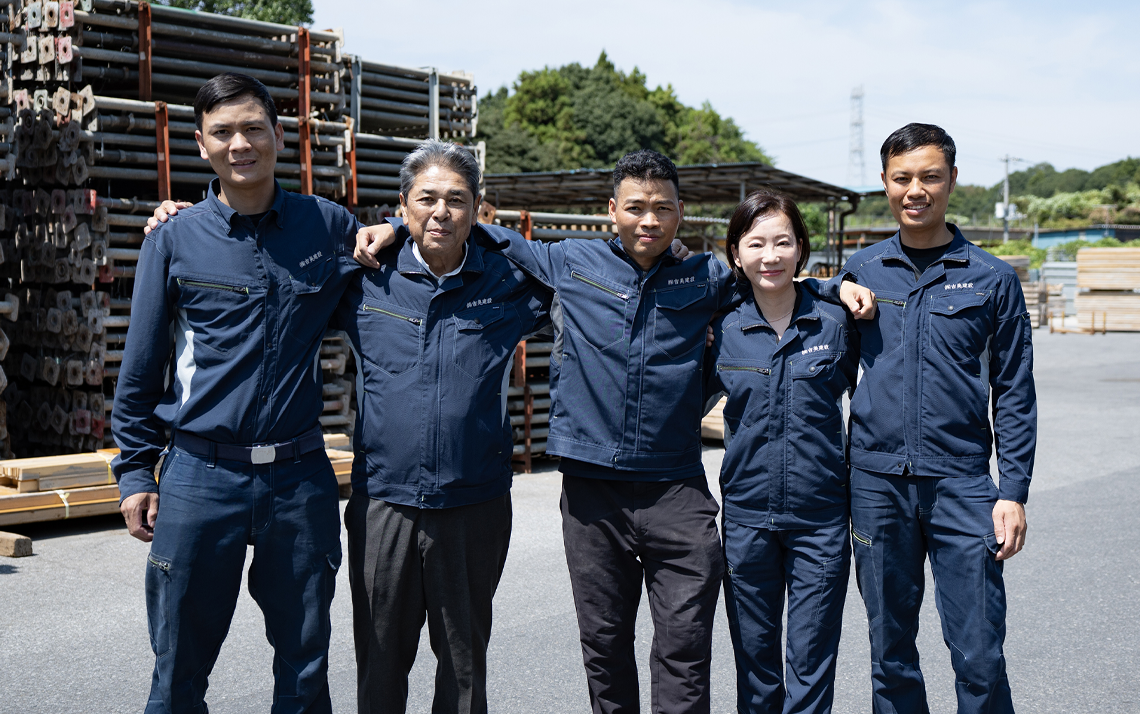
Mr. Otsuka is responsible for a wide range of tasks, from basic training and Japanese language learning to support for obtaining qualifications, to ensure that foreign workers can work without hesitation on the job site. She is creating a learning environment from scratch, including developing original materials summarizing the fundamentals of the construction industry and conducting study sessions, and is working to create a system that allows foreign workers to steadily grow.
The most important task was to lay a solid foundation.
How did the initial training for new recruits begin?
The first thing we tackled was creating materials to help them understand the basics of the construction industry and on-site work. It's unreasonable to expect Vietnamese people who have just arrived in Japan to immediately understand the workflow in Japan. So, we created everything from scratch, starting with the very basics like "What is the construction industry?" and "What is a typical day like on a construction site?"
What exactly did it entail?
We prepared a very detailed manual covering everything from morning radio calisthenics and hazard prediction (KY) procedures to site entry procedures, how to take breaks, and even the names and handling of tools. At the same time, we dedicated the first one to two weeks to learning the names of the tools in the materials storage area. We believed that solidifying the basics was of utmost importance because it greatly affects their understanding once they actually go out into the field. That being said, the initial members, such as the first group of trainees, still struggled.
We want to prioritize work attitude and diligence.
I hear you also hold Japanese language study sessions.
Yes. We currently hold a Japanese language study group every two weeks on Sunday mornings. The president's policy that "being able to speak Japanese is directly linked to both safety and career advancement" has taken hold. Everyone's goal is to pass the Japanese Language Proficiency Test (JLPT) N3 or higher. Some people start at N5, but we support them in achieving N3, N2, and N1. Currently, about eight people have N3, two have N2, and one has N1. There is a bonus for passing, so they participate with enthusiasm.
How do you evaluate career advancement?
Previously, we used an evaluation system that meticulously scored and ranked employees based on factors such as Japanese language proficiency, work attitude, and construction skills. However, at the president's request, we have now shifted to a policy of "looking at employees' diligent work ethic rather than just numbers." Instead of restricting employees with a rigid system, we now prioritize their work attitude and diligence to support their growth.
Have there been any changes compared to when you were using the evaluation system?
There haven't been any particularly problematic changes between when we meticulously scored skill levels and when we started emphasizing attitude and demeanor. Ultimately, whether there's a system in place or not, those who aim higher will learn and improve their skills on their own, and there are also those who are content with working for a few years under the Specified Skills. I feel that differences in a desire to learn and attitude towards work are directly reflected in differences in growth.
Don't let learning that connects to the future get interrupted.
What do you want to prioritize in future player development?
Ultimately, I want to create a highly skilled group of Japanese and foreign workers. To that end, we are currently holding practical training sessions twice a month for members aiming for Specified Skilled Worker (ⅱ) visa, led by a carpentry foreman to teach the skills of a Class 1 Formwork Installation Certified Skilled Worker. While practicing the exam tasks together, we are not only developing their skills but also their leadership qualities. I want to encourage them so that they can become leaders who can manage construction sites in the future.
With concerns about a dwindling workforce, the role of training and development is crucial.
Framing construction work industry is facing an aging workforce and a shortage of skilled workers, making it increasingly difficult to continue working in the same old ways. New construction methods will likely become necessary. That's why we are unwilling to hesitate to invest in training to adapt to these changing times. While study sessions and material preparation may seem unassuming individually, we believe they will become the foundation for supporting future construction sites.
(Interviewed on August 27, 2025)