
Rather than focusing on determining who will thrive,
It makes me happy to see them grown up so well.
2025.07.31



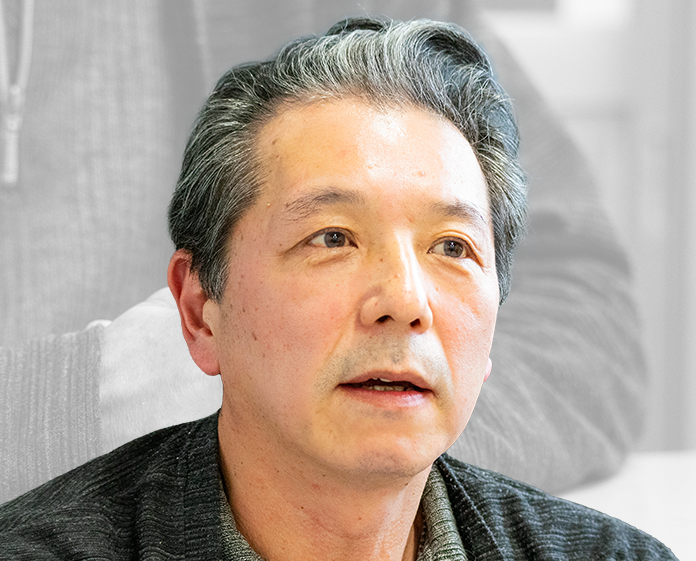
Representative Director
Ikki Fukuda
Mr. Fukuda, president of FUJIYAMA INDUSTRY Co., Ltd., says that when accepting new employees, he finds joy not in "who develops," but in "how they develop." Mr. Fukuda, who says that a serious attitude towards work is more important than ability, shared his thoughts on acceptance and development.
The "language barrier" is surprisingly small.
Are there any difficulties you encounter when accepting foreigners?
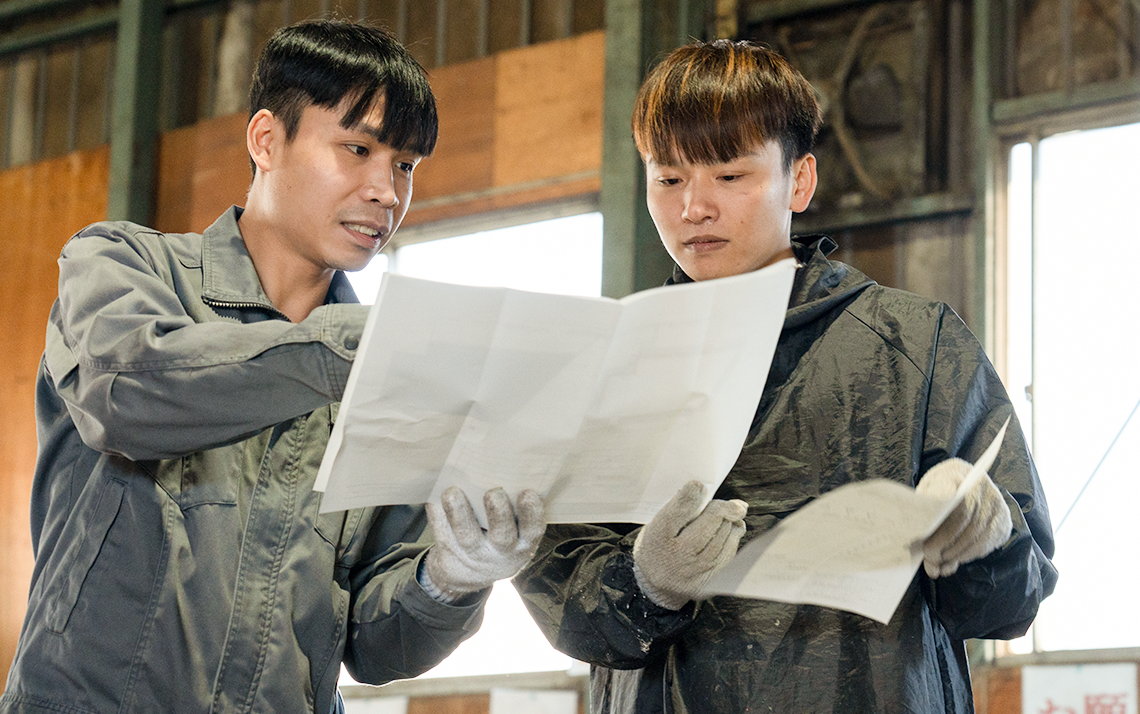
One of the most commonly cited difficulties in working with foreigners is the "language barrier." However, I don't feel it that much. My approach is to teach through practical experience—showing them how to do it and letting them imitate—so I don't think it's much of a problem. In addition, they are so dedicated to their work that even if we don't speak the same language, I can still convey what I want to say.
Do you notice any differences when comparing young foreign employees with young Japanese employees?
There's nothing in particular to mention. Among the foreigners currently working at our company, some are skillful and quickly learn the job, while others, though less skillful, are diligent and never oversleep. They seem quite contrasting to me, but both are serious about their work. Considering that, I think they're not much different from young people in Japan.
Start by "listening" to their requests.
Is there anything you consciously focus on in your daily coaching?
I give them advice on clothing and grooming so that they can be well-liked by their Japanese seniors. They are still young, and perhaps because of their different national character, some of them are rather sloppy. However, this is not limited to foreigners; young Japanese people do the same thing. Even in that respect, I don't give them special treatment just because they are foreigners, and I point it out to them.
How do you handle requests from foreigners?
I respond to requests that I can fulfill, and I tell them when something is difficult. However, for them, the act of making a request itself seems meaningful. They believe it's important to express their feelings and opinions. Therefore, regardless of whether I accept their request or not, I make it a point to first "listen" to what they have to say. I believe that this attitude leads to trust.
Are there any memorable experiences you've had while continuing to accept them?
I was once introduced to a foreigner who was in need of protection at another company. Apparently, they had been subjected to discrimination, and the union asked if we could employ them, which we accepted. As a result, that person has grown rapidly since joining us and is now a valuable asset. Seeing that, I truly feel that taking them in was the right decision.
I'd rather have a turtle-shaped one than a rabbit-shaped one.
Are there any specific points you look for when hiring?
I've been doing this job since I was 20, so it's been over 30 years now. I've seen a lot of people, but honestly, I don't think it's possible to judge someone based on a short interview. So, basically, my policy is to accept anyone who comes to me. That being said, there have been times when I've had trouble training people after hiring them because they couldn't maintain their focus on the job and didn't remember what I taught them.
So, you're still not going to change your stance?
Those kinds of people can change suddenly. A tortoise-type personality might thrive more than a rabbit-type. Of course, work skills are important, but when you're working together, trust is paramount. Rather than "selecting" people, I believe in properly "nurturing" them. That's my stance.
(Interviewed on November 7, 2024)