By making the evaluation criteria visible,
They have started to work even harder.
2024.08.01



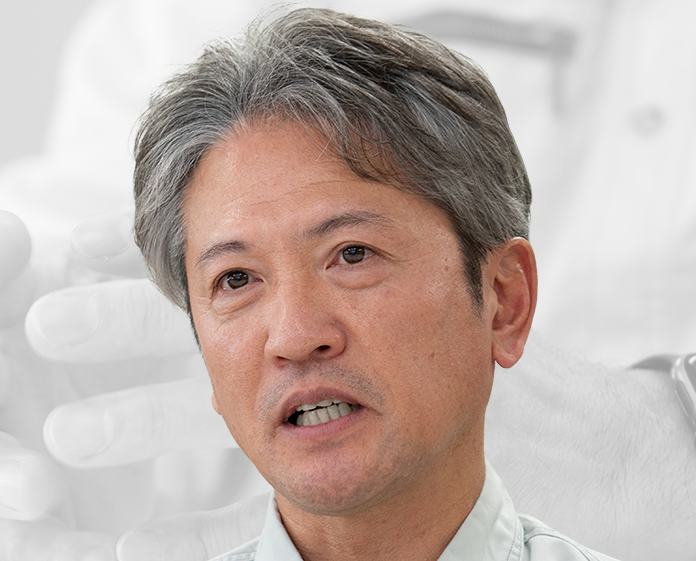
RC Business Department Manager
Akinori Yoshikawa
Mr. Yoshikawa, who supports foreigners as a caretaker, created a "skill evaluation sheet" after hearing from foreigners that they wanted to "try challenging tasks." As soon as the evaluation criteria were clarified, the foreigners began to work even harder. We spoke to her in detail.
The interview will assess your communication skills.
What do you look for when hiring?
I don't have any particular preferences, but since formwork work is mainly done in groups, it would be difficult if someone is too strong-willed and can't cooperate. So, in interviews, I ask questions like, "Can you work with senior colleagues?" and "You might be sharing a room with a colleague in the dormitory," and I mainly hire people who seem to have good communication skills and can readily accept these things.
Are you actually able to build good relationships in the workplace and other settings?
When we first welcomed him, I saw him greeting and talking to the people on site without me having to tell him to, and I thought, "This will be fine." If you make an effort to get along, the craftsmen will be kind to you, even if you're from another company. In that respect, the foreigners who work for our company have no problem fitting in.
We comprehensively evaluate technical skills, social skills, and language use.
Are there any specific things they did to improve their work?
Initially, because we didn't know their capabilities, we tended to assign them mostly simple tasks. Then, they started saying they wanted to try more difficult things, and we had several discussions about it. I realized that if we continued like this, they would be working under stress, so I gradually increased the difficulty level of their work.
Are there any specific methods you use in your evaluation process?
We created a "Competency Evaluation Chart" as a guideline for evaluation. It comprehensively assesses aspects such as technical skills, social skills, and language use. During interviews, we review each item one by one, explaining, "You can do this, but you're lacking in this area." This helps the individuals understand what they need to work on, and they become even more motivated to improve.
Your motivation to work has increased, hasn't it?
Yes. In addition, we've seen a decrease in complaints based on vague reasons like, "I'm working harder than that person." We've also seen a willingness to take on challenging tasks. For example, the Japanese Language Proficiency Test. Even though I told them I wanted them to work hard on their Japanese, they were reluctant to do so. But I was surprised when they suddenly became motivated as soon as they realized it would lead to a higher evaluation.
I was deeply moved by the hospitality I received from foreigners.
Are there any specific things you pay attention to when interacting with colleagues at work?
I am careful about my choice of words. In everyday communication, there are times when I can't communicate well because they don't understand Japanese. In those cases, I try to speak with the attitude of "it's okay if they don't understand." If I explain things repeatedly in a harsh tone, they might misunderstand and think I'm blaming them. I also don't want them to feel uncomfortable asking me questions in the future, so I make sure not to use a harsh tone.
What are some of the most memorable things you've experienced from interacting with them?
One day, some Vietnamese people who had just arrived in Japan invited me to their room. When I went to their dorm room, they had prepared a meal from their home country and even had alcohol ready for me. It was before they had been paid, so they probably didn't have much money, yet they still went to the trouble of treating me. I remember being deeply moved by the fact that I was able to work alongside such kind and generous people.
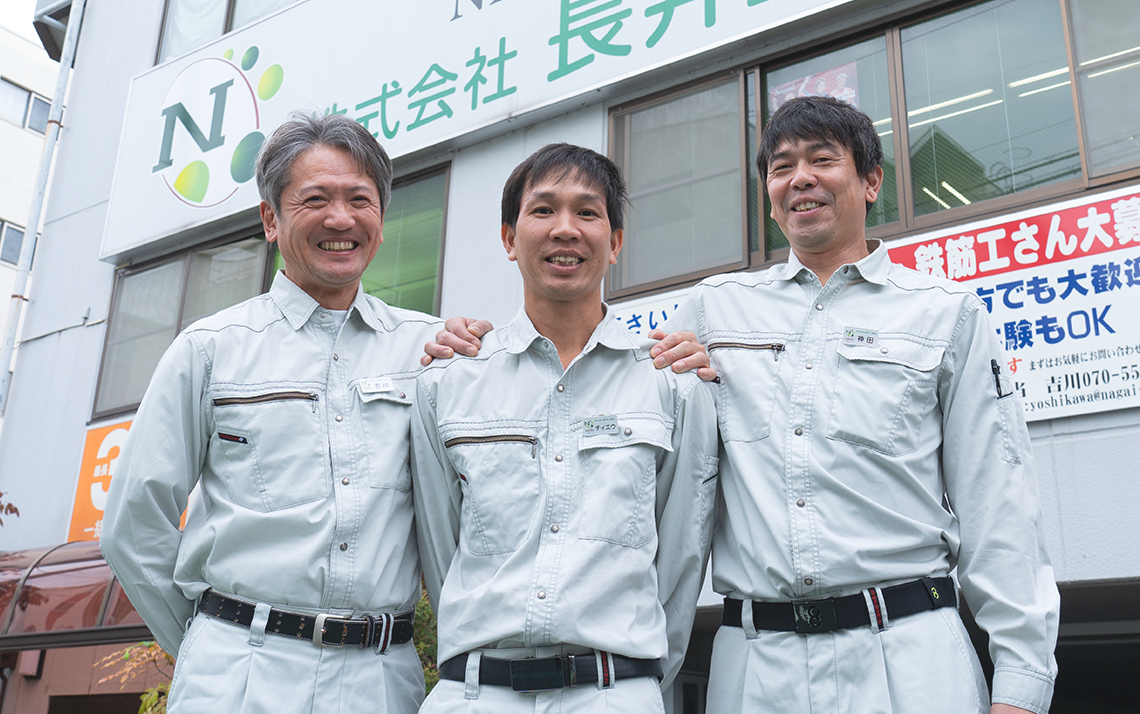
(Interviewed on October 31, 2023)