



Differences in culture and customs are something we all have to accept.
That's why mutual understanding is necessary.
2023.02.01



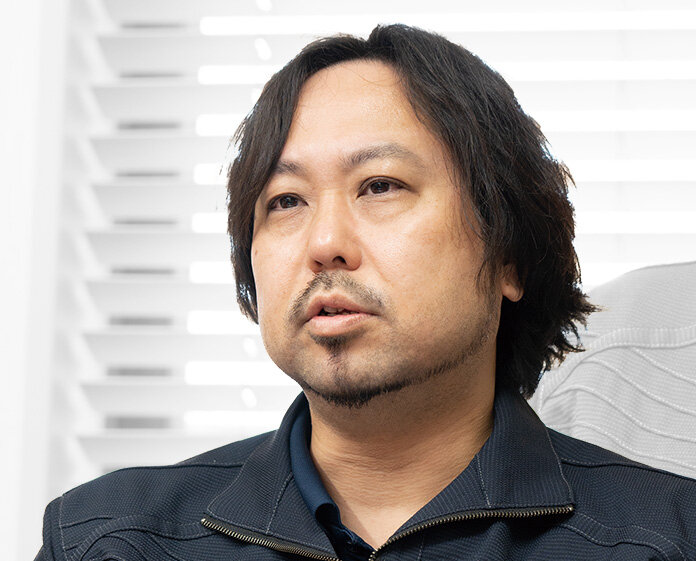
Renewal Department 3 Section Chief
Kazutoshi Ito
Mr. Ito, who took charge of training foreigners from a point where she had absolutely no knowledge of them, shared in detail the challenges she faced and the strategies she used to overcome them.
I didn't know where to begin, so I started by feeling my way in the dark.
What preparations did you make before starting the program?
Our president knew a company that employs foreign workers, so we invited them to our company to learn about their training methods. In particular, securing a training area to teach basic skills before sending them out to the field was a top priority, and they gave us valuable advice on how to create such an area.
What exactly do you teach in the practical training area?
After accepting new recruits, we provide a 30-day training period where they receive instruction on practical tasks such as applying putty and hanging wallpaper in the workshop. We also provide them with a list of all the tools they will use, including cutters, brushes, tool belts, sponges, and glue, and help them memorize the names of each item.
It was difficult to teach the importance of being punctual.
What was the most challenging thing you experienced while supervising the work?
Foreigners tend to be lax with time, so I made sure to be very careful about that. For example, if we were supposed to meet at the workshop at 8:00, I would have them arrive 10 minutes early to clean, get dressed, and be ready to start work exactly at 8:00. Being late is strictly forbidden when it comes to work. You can't gain trust unless you're at the designated place on time without being late. It was quite difficult to get them to understand these habits.
What safety measures were in place at the site?
There are areas on the construction site that are off-limits, so I asked the foreman to make sure no one entered those areas. However, simply saying "You can't go in there" in Japanese doesn't really get through to them. So, I made it a rule that they "only use the routes designated by the foreman" and made sure they understood that clearly.
The most important thing is to keep asking, "Is something wrong?"
What precautions did you take in your daily life?
At first, they were making a mess of the dorms. It seems their sense of cleanliness is fundamentally different from ours as Japanese; what I consider messy is normal for them. Therefore, cleaning the training area was a very important step in helping them understand our standards of "cleanliness." Even now, we're helping them develop the habit of tidying up through their work.
Are there really differences in culture and customs between Japan and other countries?
Myanmar, in particular, has a wide variety of religions. There are Islam, Hinduism, and various sects within each religion. Also, the population is diverse in terms of ethnicity, including Chinese and Indian people. These differences extend to ways of thinking and the types of food people eat.
Understanding is important.
That's right. If they're scolded unilaterally before they even understand Japanese culture and customs, they're bound to get upset. They probably have things they want to say to us too. That's why I believe it's most important to keep asking them "Is something wrong?" or "Is there anything bothering you?" in their daily lives.
(Interviewed on October 24, 2022)
