


Because I understand their feelings,
I want to think about it together with you as much as possible.
2023.02.01



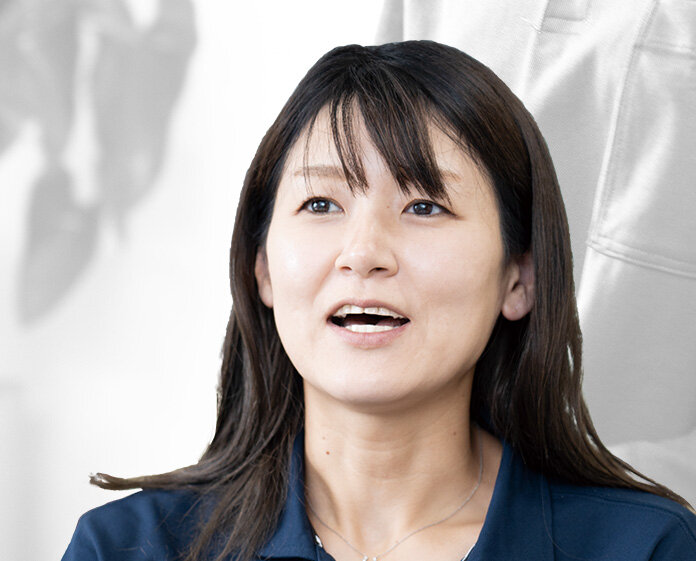
Management Department Safety Section Manager
Yukiko Kobayashi氏
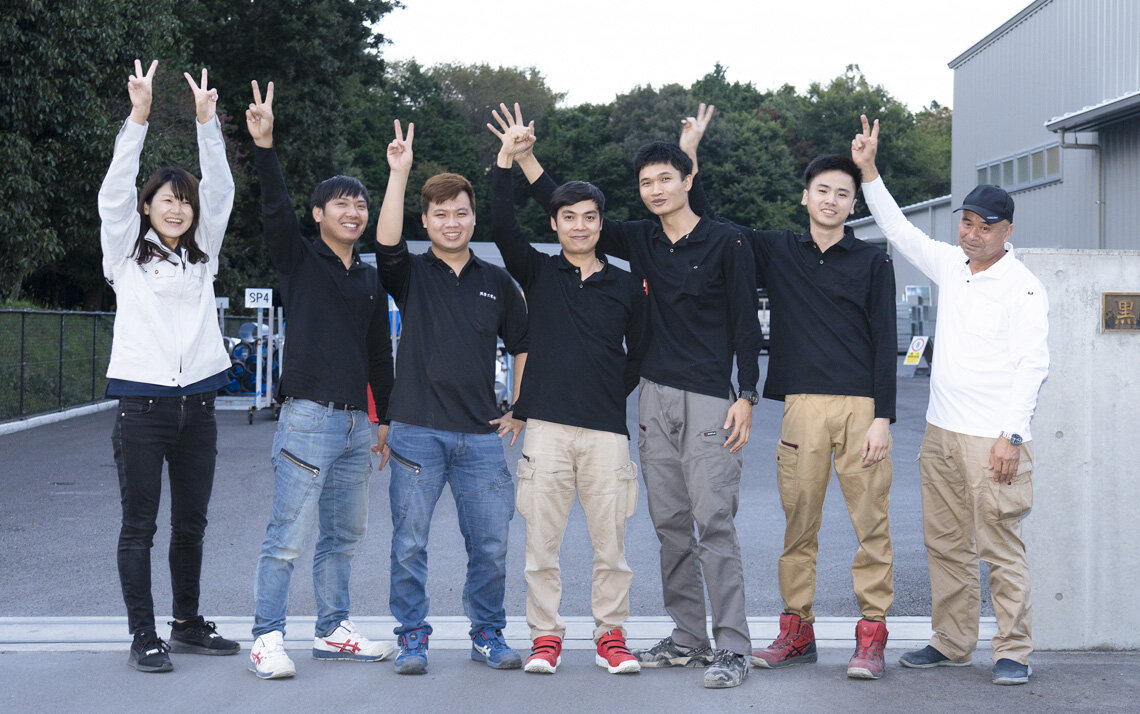
Ms. Kobayashi acts as a caretaker for the Vietnamese employees in the company, supporting them like a mother and communicating with them on a daily basis. This time, we asked her about her tips for interacting with foreigners and her daily interactions with them.
After joining the company, we provide retraining on everyday spoken language.
Is it difficult to communicate with Vietnamese people?
My family runs a farm and we used to accept Technical Intern Trainee, so I had many opportunities to interact with people from various countries from a young age. Perhaps because of that, I can somewhat understand the broken Japanese spoken by our Vietnamese employees. In that sense, I don't find it particularly difficult.
Are there any particular things you pay attention to when teaching language?
Most foreigners who come to Japan after studying Japanese learn standard Japanese. However, our company, located in Ibaraki Prefecture, speaks the Ibaraki dialect, so if they speak it as is, they won't be understood. Therefore, we ask new employees to learn the local dialect after joining the company.
So you're teaching everyday conversation, not standard Japanese?
For example, you wouldn't say "That's dangerous" when it's truly dangerous. You'd probably end up using a stronger tone like "Watch out!", so I teach them those kinds of expressions from a young age.
Activate communication using social media
What are some of the things you do to improve your communication style?
Since it's difficult for them to speak Japanese when they first arrive in Japan, they send me messages in Vietnamese using social media like Facebook Messenger, and I translate them online and reply in Vietnamese asking, "Do you mean this?" This way, they send me a lot of things they couldn't convey in conversation.
Is it easier to ask questions in your native language?
I'm absolutely certain of that. Sometimes they send me photos of things they don't recognize, for example, asking "What kind of food is this?" They probably found an unfamiliar ingredient while shopping.
She's just like a "Japanese mother."
I've also received inquiries from people who want to give cosmetics as a gift to their significant other, but don't know how to use toner and lotion, or how to use face masks and cotton pads. So, I use my own products and make videos showing them how to use them, saying things like, "This is the first thing you should do." They seem happy with the gifts, so I enjoy those kinds of interactions.
Teaching morals and small acts of consideration is the most difficult.
Do you ever get asked for advice on work-related matters?
I don't have the expertise to give work-related advice, but I can help with language-related questions. A common one is, "I didn't understand what a Japanese person said to me at work today." My advice is to at least write it down and send it via social media if you don't understand it.
Is there anything you find particularly difficult when teaching?
I often find moral issues difficult. For example, is it okay or not to sleep in the car on the way to a work site? To be honest, it's hard to say what the right answer is to this question. So, if I'm tired and about to fall asleep, I always instruct my Japanese colleagues to ask the driver, "Excuse me, may I take a short nap?" I try to help them think through these small acts of consideration as much as possible.
(Interviewed on September 29, 2022)
