With a career plan that looks to the future,
A workplace where you can work with peace of mind for a long time.
2026.05.20


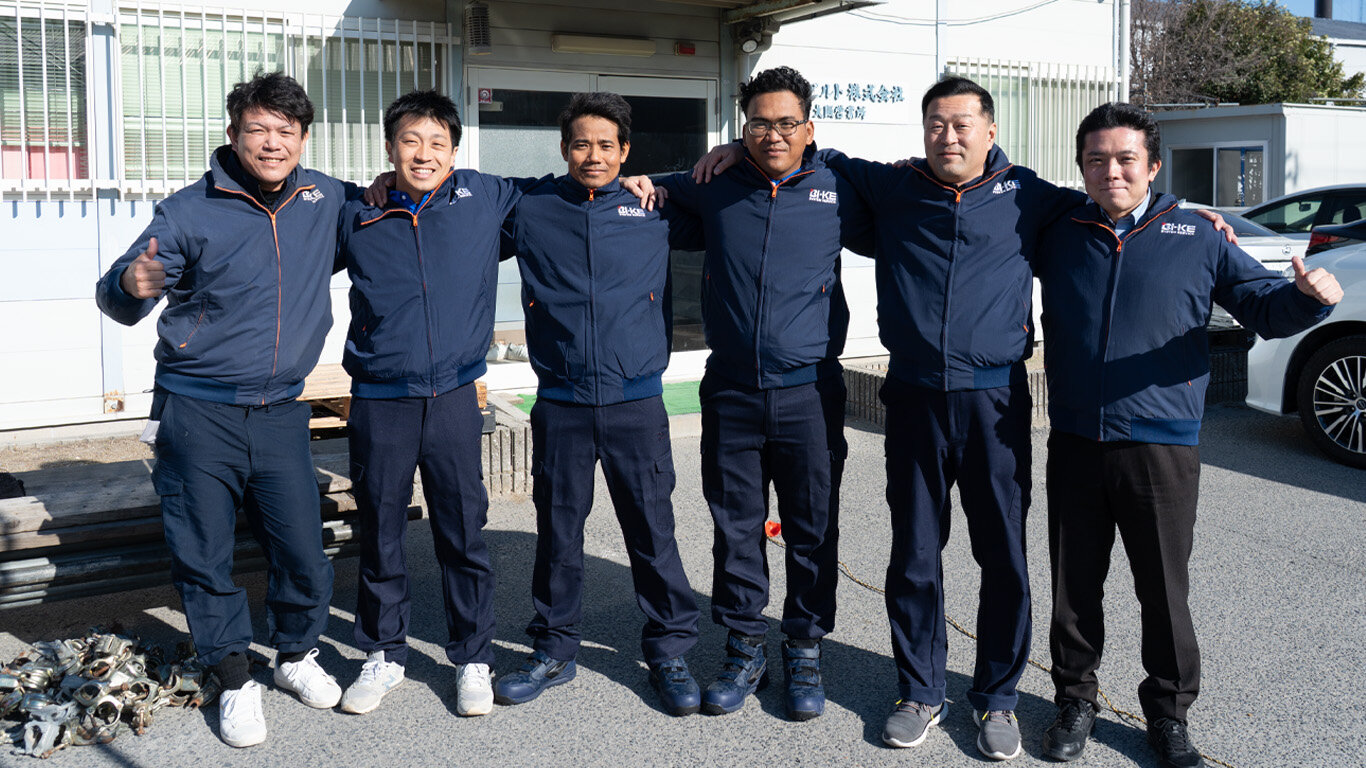
Kokan Bilt Co.,Ltd. in Osaka Prefecture began accepting Technical Intern Trainee in 2002 and continues to employ many foreign nationals today. This time, we introduce the voices of Mr. Nakayama, a director of the company, and two Specified Skilled Worker. (Interview conducted on January 29, 2026)
Company Profile
| location: | 2-11-20 Minamisenba, Chuo-ku, Osaka-shi, Osaka Prefecture GATO Sankyubashi Building (3rd floor) |
|---|---|
| Business details: | Rental and installation services for wedge-type scaffolding "Bike scaffolding". |
| Number of employees: | 118 people |
| Acceptance status Specified Skills: 39 people Technical Intern Training: 31 people (Indonesian, Vietnamese, Myanmar nationals) |
|
| Website: | http://www.bilt.co.jp/ |
| Initial setup: | Securing dormitory accommodation, household appliances, a bicycle for commuting, a complete set of equipment, hiring an interpreter/Japanese language instructor, and holding weekly Japanese language study sessions. |
Salary Image
- Specified Skills (monthly salary)
Approximately 300,000 yen
*Includes a fixed overtime allowance of 70,000 yen, salary increases based on skill proficiency, and a separate allowance of 10,000 yen for a semi-medium-sized vehicle license. - Technical Intern Training (monthly salary)
Approximately 200,000 yen
Interview Host Companies
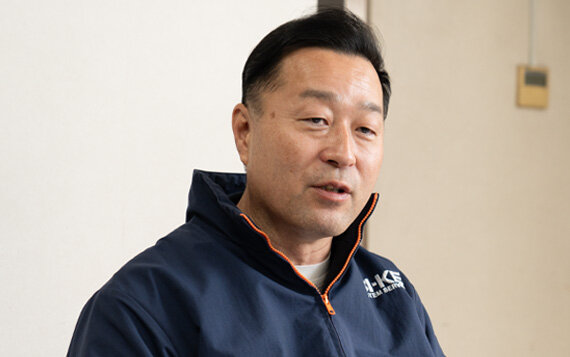
Directors
Kensuke Nakayama
Please tell me about any strategies you use when accepting guests.
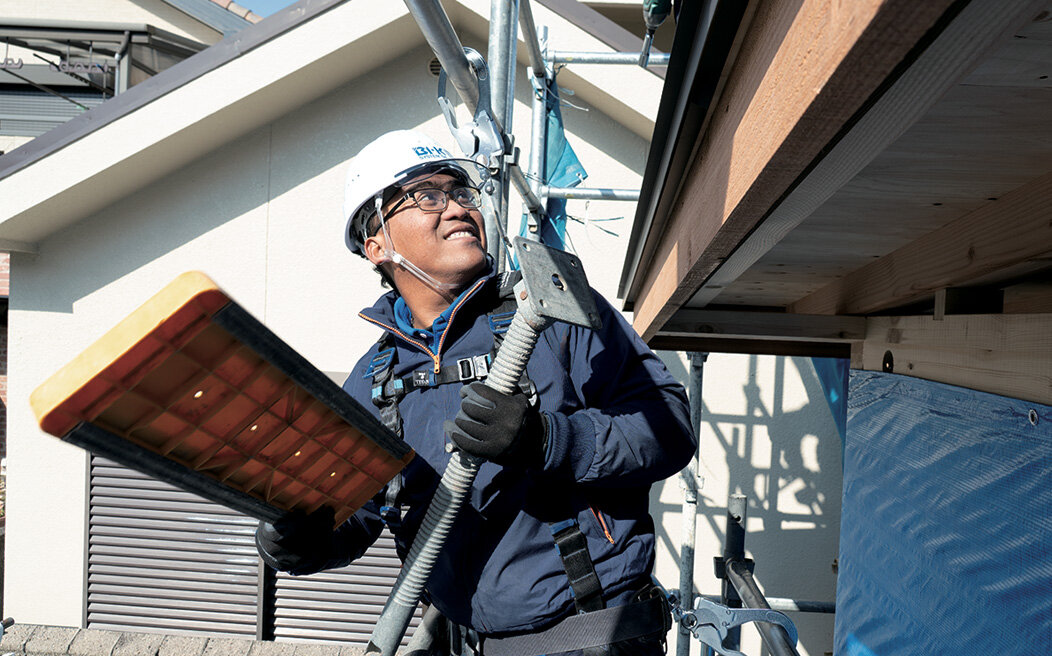
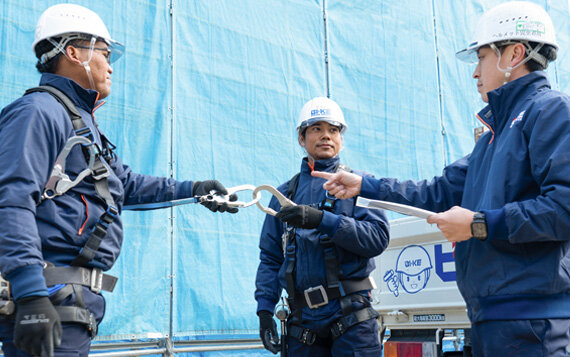
In collaboration with Indonesian sending organizations, we conduct a one-month practical training course before trainees arrive in Japan. Using materials actually used in Japan, trainees gain experience in assembly techniques and the use of full-body harnesses. We also create individualized training plans outlining the career progression from trainee to Specified Skilled Worker (i), and then to Specified Skilled Worker (ⅱ), explaining in advance when they will acquire qualifications and what roles they will play.
What is the purpose of the on-site training?
While the ability to immediately contribute on-site upon arriving in Japan is certainly an advantage, the biggest benefit is the prevention of mismatches. Scaffolding materials are heavy, and the work is by no means easy. By actually experiencing the work, we can reduce the number of cases where people find out after joining the company that "the job is different from what I expected."
What are your thoughts on training foreign players?
The construction industry is currently facing an aging leadership structure. Until now, experienced Japanese workers have primarily managed construction sites, but there is a possibility of a shortage of personnel to fill this role in the future. This is where we are looking to foreign workers. We want them to gain experience through long-term employment and develop into leaders capable of managing sites in the future. To achieve this, we believe it is crucial to systematically train them through qualification acquisition and training courses.
Please tell me what the next steps will be.
Our main goal going forward is to increase the number of people with Specified Skilled Worker (ⅱ) With this visa, there are no restrictions on the period of stay, allowing them to work in Japan for longer. An increase in such personnel will make it possible to operate workplaces with teams composed solely of foreign nationals. Ultimately, we aim for them to become core members of the workplace, just like Japanese workers. We intend to continue developing the necessary systems and training programs to achieve this.
Voices from those working on-site
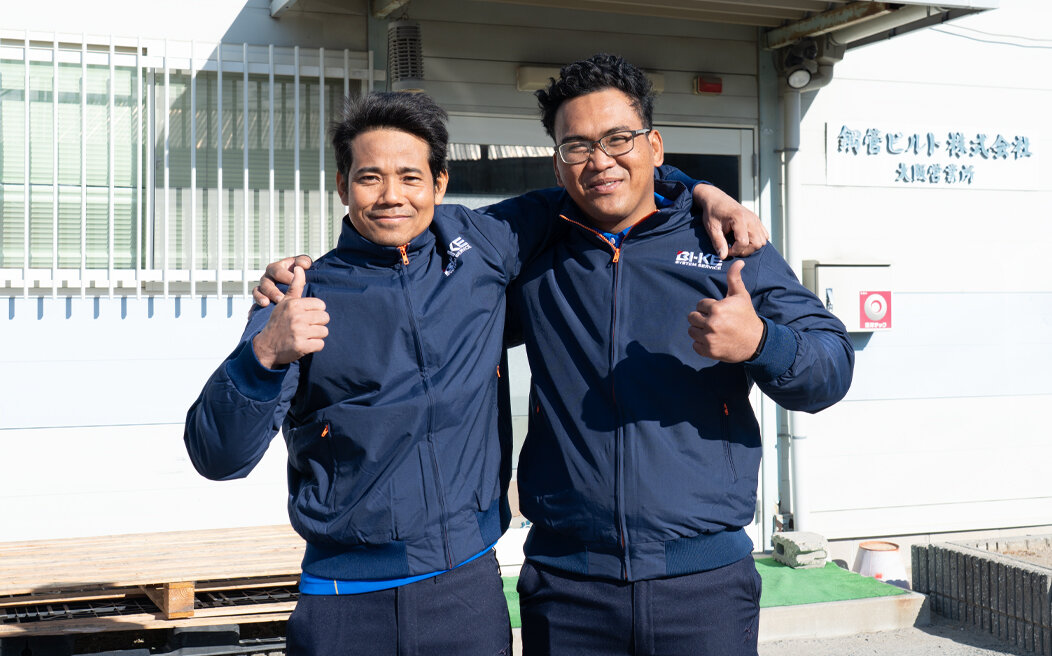
We spoke to two Specified Skilled Worker who are employed by the company about their work and life in Japan, as well as their future goals.

ウトモ
I was drawn to Japan's disciplined work style!
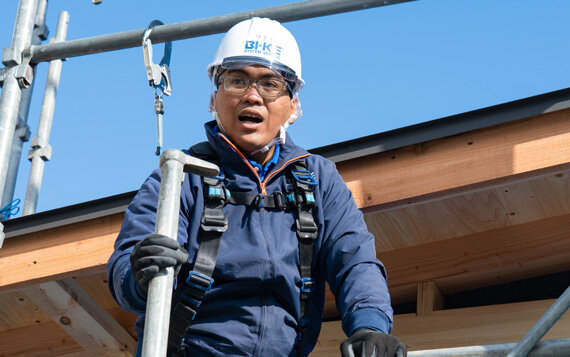
UTOMO decided to work in Japan because she wanted to save money for the future. "Japan's strict adherence to time and rules was appealing to me." She enjoys physical activity and finds construction work rewarding. Her goal is to return to Indonesia in the future and start her own scaffolding company. "I've heard that the company will support me, so I want to make my dream come true."

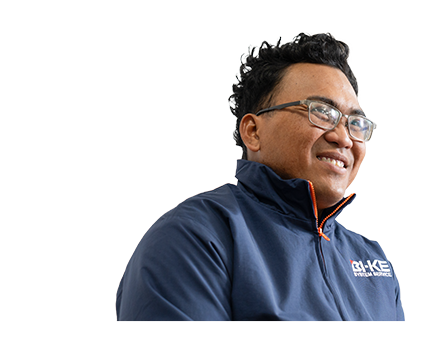

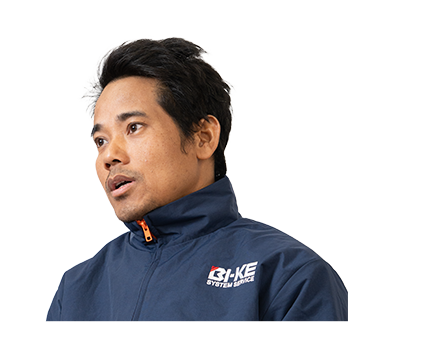
THEIN HTIKE SAN
I'll put into practice what I've learned from my seniors and I definitely want to become No. 2!
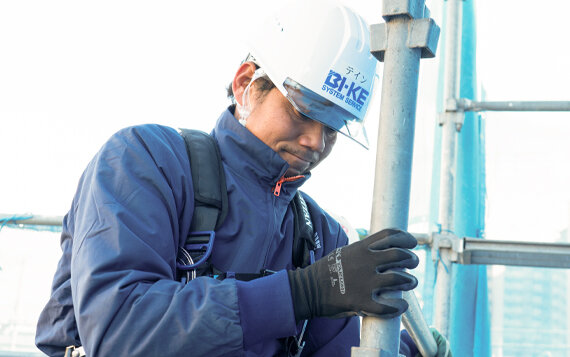
THEIN HTIKE SAN worked in construction in his home country of Myanmar, and he is now using that knowledge to work in Japan. He says that he initially struggled with Japanese because of the difficult katakana and kanji, but "I started to understand the meaning around my second year." If there is something he doesn't understand, he asks his seniors to "please explain it again" and is a diligent worker who makes sure he understands. He is currently studying to become Specified Skilled Worker (ⅱ).