Imagine yourself in the opposite position and consider their resolve.
Showing respect is important.
2026.02.27


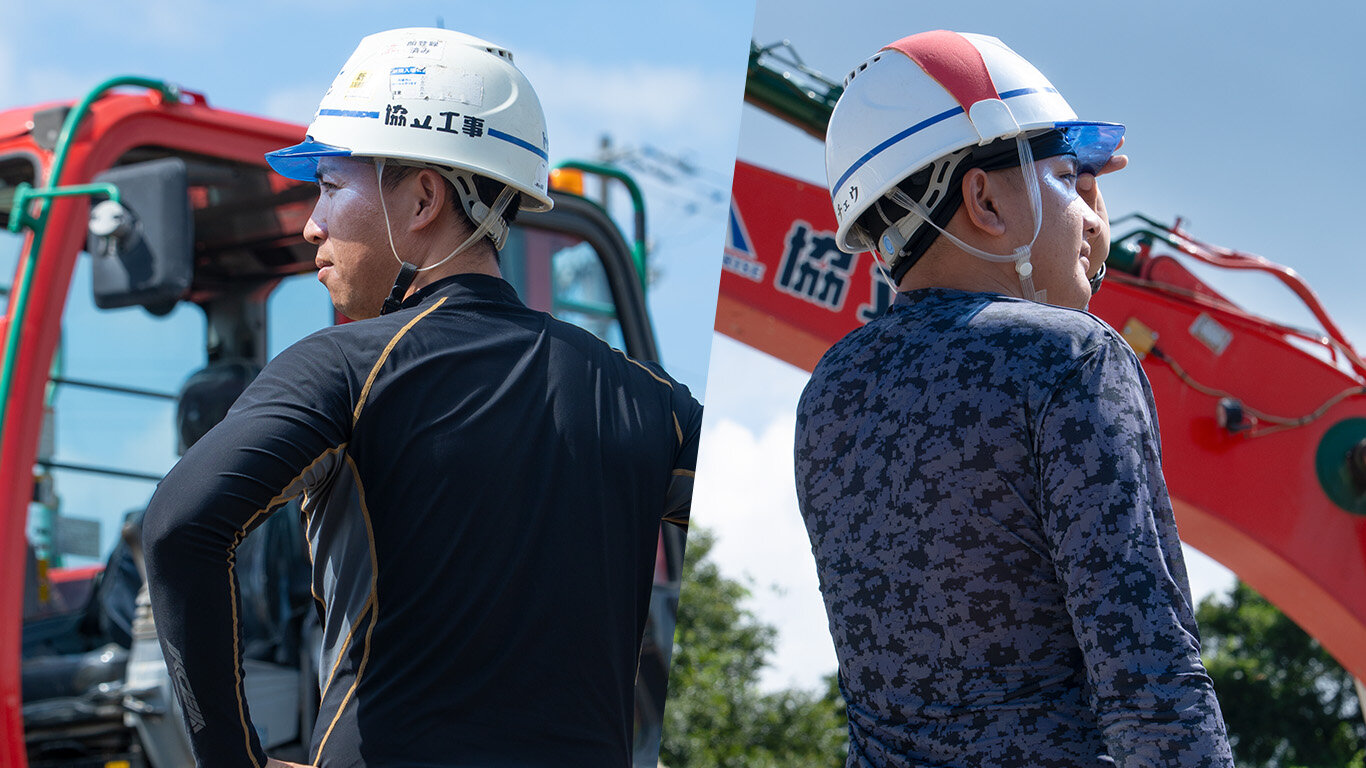
Kyouritsu Kouji Co., Ltd. in Aichi Prefecture began accepting foreign workers in 2022 and currently employs many foreign nationals. This time, we introduce the voices of the company's representative, Mr. Nakamura, and two Vietnamese employees. (Interview conducted on September 30, 2025)
Company Profile
| Location: | 3-18 Sakuramachi, Anjo City, Aichi Prefecture |
|---|---|
| Business details: | Civil engineering business |
| Number of employees: | 45 people |
|
Acceptance status
Specified Skills: 4 people Technical Intern Training: 9 people (Vietnamese, Nepalese) |
|
| Website: | https://kyouritukouji.com/ |
| Initial setup: | Dormitory accommodation, electrical appliances, air conditioner, television |
Salary Image
- 特定技能(月額基本給)
約26万円
* Salary increases are available depending on skill level and proficiency. - Technical Intern Training (Monthly Basic Salary)
Approximately 200,000 yen
Interview Host Companies
Representative Director
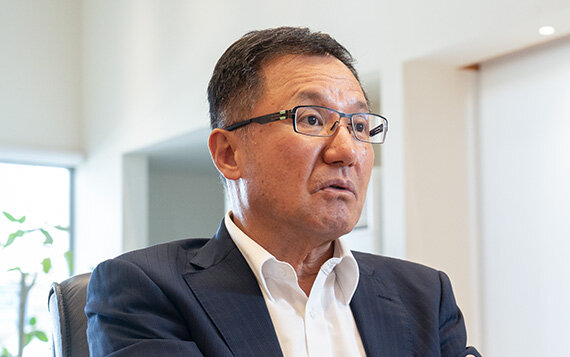
Yoshiyuki Nakamura
What were your impressions after actually trying it?
They are venturing into a country with a different language and culture. I truly admire their determination. This is especially true for the first group of trainees, who are coming to Japan without any senior colleagues to rely on. I feel it's important to first show respect for their determination. For the second group and beyond, the presence of their fellow trainees who arrived before them becomes a source of emotional support, and they gradually adapt, but even so, the decision to work in a foreign country is no easy feat.
Did you encounter any problems due to language barriers?
We've had complaints from craftsmen saying they couldn't communicate properly. But in those situations, I think, "How would you feel if you were in their shoes?" Japanese people should also make an effort to learn at least "good morning" in Vietnamese. Plus, they become valuable assets on the job site right away, so I feel that time will solve many of the problems.
What growth steps are you envisioning?
Many small and medium-sized enterprises lack well-established evaluation systems, but we believe it's crucial to make it clear how skills and roles are reflected in compensation at each stage. It's also important to have Japanese senior colleagues within the company who can serve as role models, allowing newcomers to visualize what kind of compensation they can expect at each level. We never impose upper limits based on nationality. Who you learn from and who you look up to—the apprenticeship culture in the construction industry will undoubtedly continue to support their growth, even in today's world.
Please tell me what the next steps will be.
Due to the declining birthrate, Japan will inevitably face a shortage of engineers and skilled workers. Meanwhile, social infrastructure is reaching a renewal stage, and there will be a huge demand for maintenance on roads, bridges, tunnels, water and sewage systems, and more. Even with advancements in robots and AI, the final touches will still require "human skill." That's why collaboration with foreign talent is essential. Furthermore, if foreigners return to their home countries in the future, there's a possibility of technical partnerships with local construction companies. Japan's expertise in "repair" and "extending lifespan" will undoubtedly be useful in other Asian countries as well. Thinking about this opens up a world of possibilities.
Voices from those working on-site
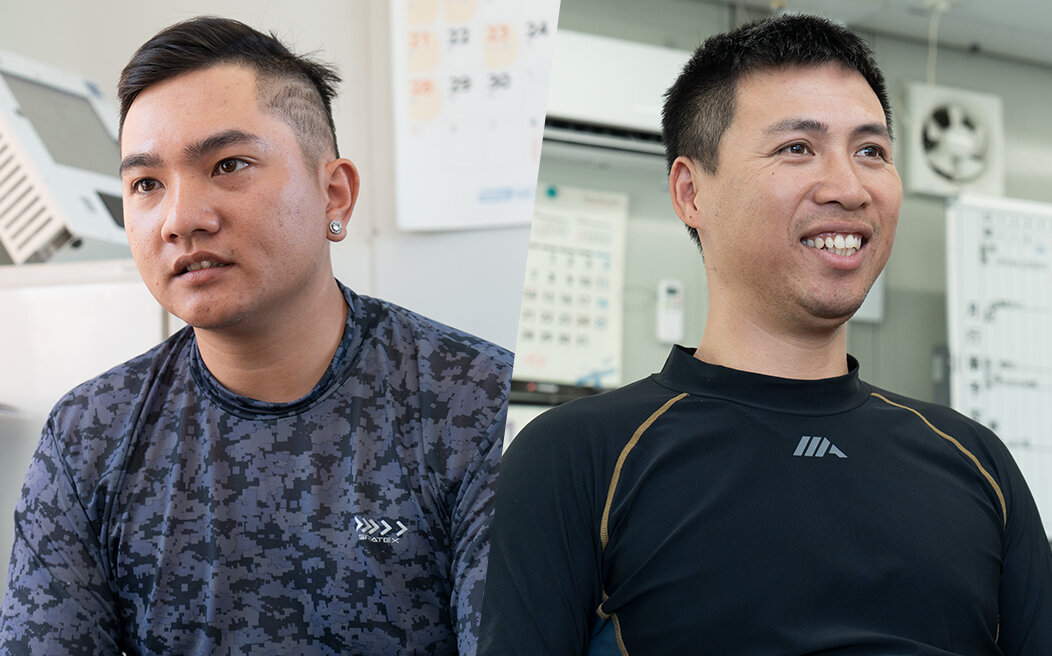
We spoke with TRIEU and Ms. TUYEN, both Vietnamese employees of the company, about their work and life in Japan, as well as their future goals.

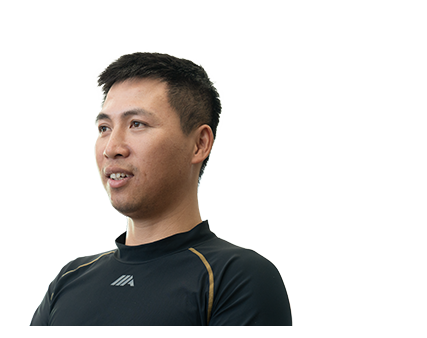
チェウ
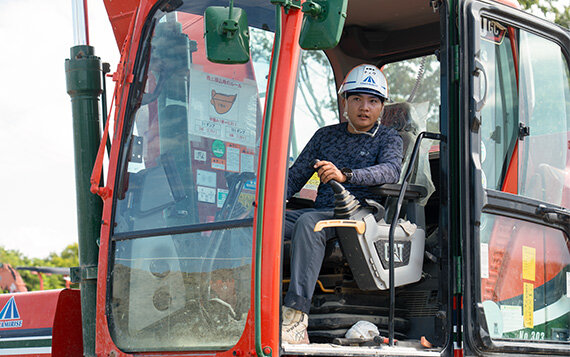
I started working in the construction industry at the age of 20. I felt that Japan's high level of safety awareness was one of its strengths.
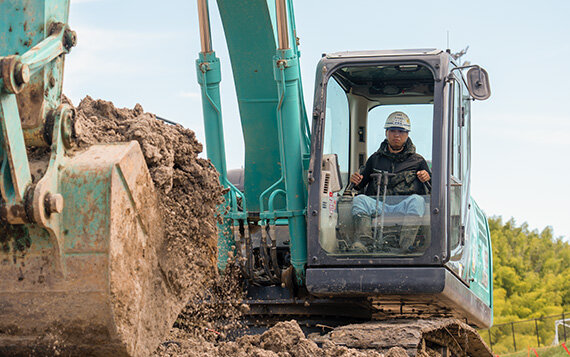
TRIEU has been involved in the construction industry in Vietnam since he was 20 years old. He also has experience working in China and Laos, but recalls, "There were few supervisors everywhere, and it was very dangerous." On the other hand, in Japan, "the schedules and procedures are clear, and they are always checking on things, so I can work with peace of mind." He continues to study Japanese online and is working hard to absorb new knowledge.

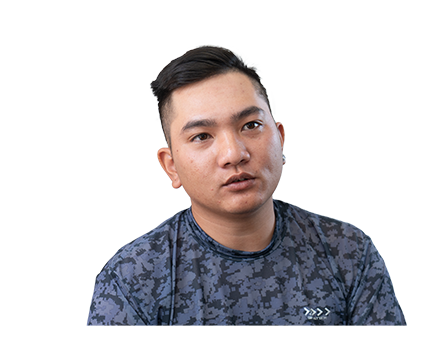
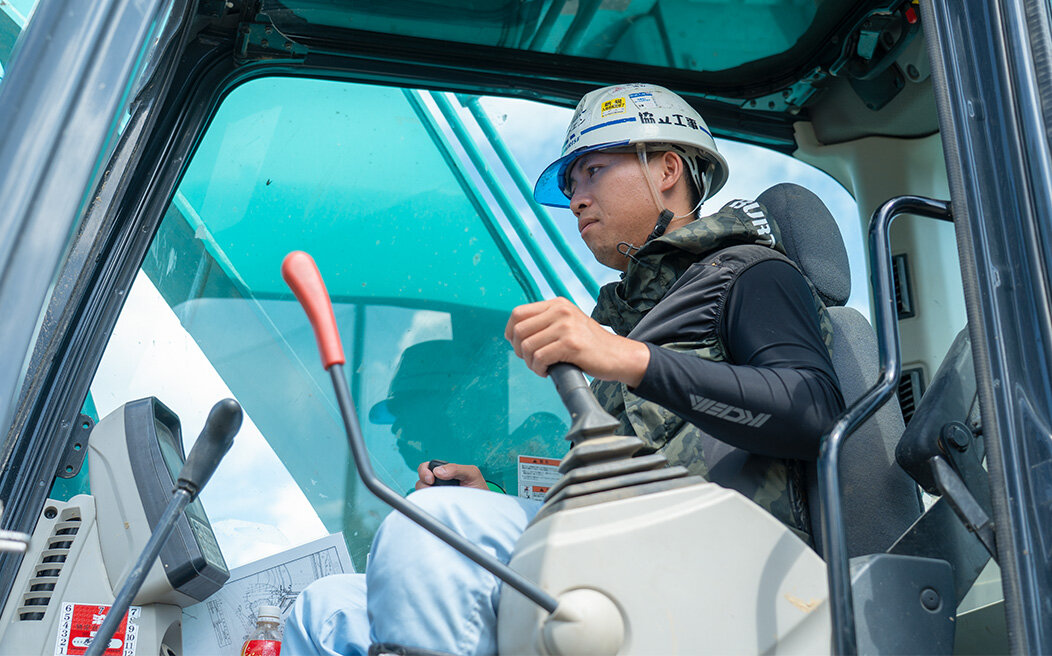
トゥエン
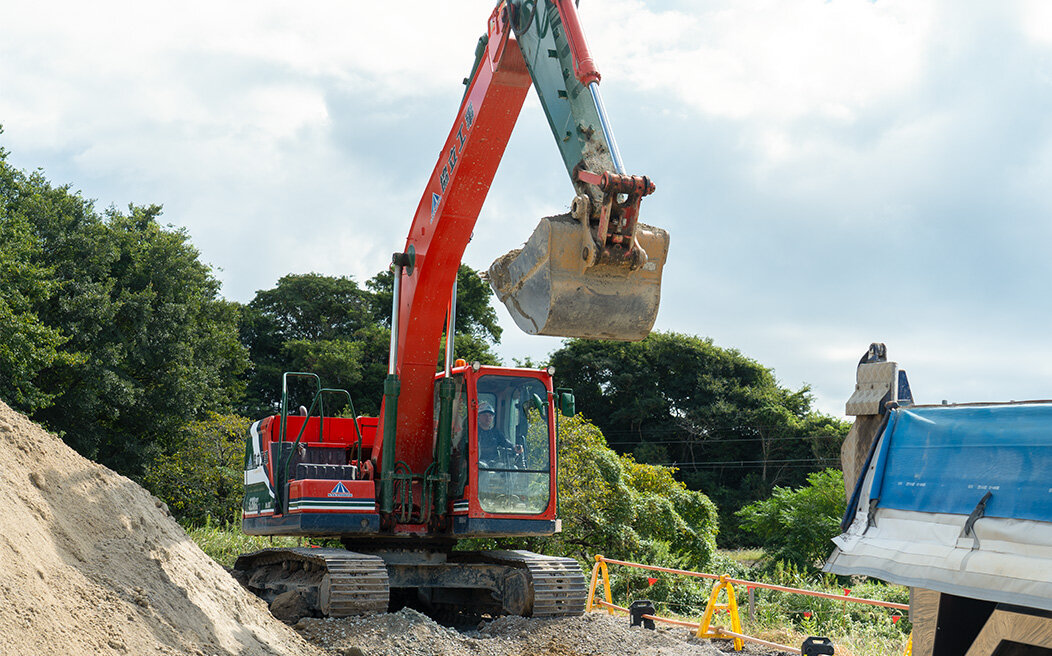
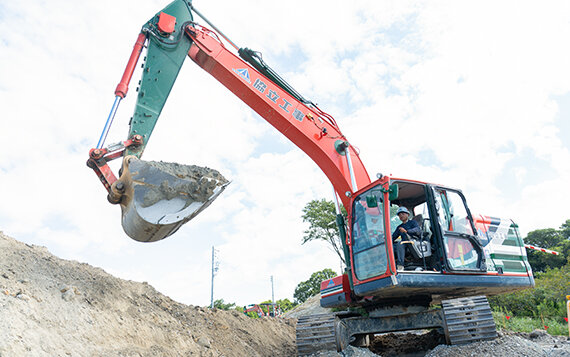
I want to hone my heavy equipment operation skills and live in Japan with my wife for a long time!
TUYEN also worked in construction in his home country. He came to Japan because he wanted to "learn about the Japanese construction industry," and he was particularly interested in operating heavy machinery. "Operating a backhoe is very difficult, and at first I couldn't move it the way I wanted." In his private life, he married a Vietnamese woman in 2021 and they now live together. In order to live in Japan with his wife for a long time, he is currently studying for Specified Skilled Worker (ⅱ) examination.