We want to introduce the Japanese way of working to other countries, and bring talented people from around the world to Kesennuma.
2024.03.27


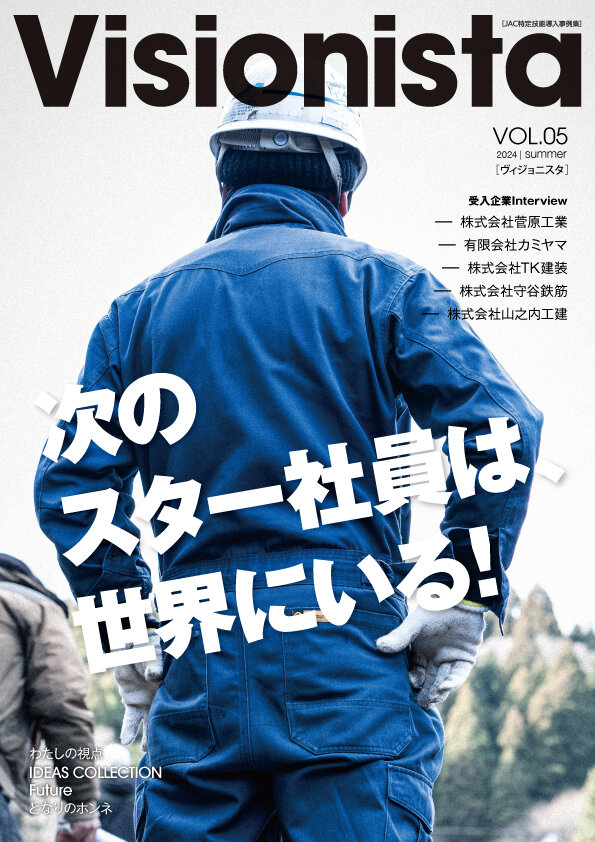
SUGAWARA KOGYO CO.,LTD. in Miyagi Prefecture began accepting Indonesian workers in 2014 and continues to employ them today. This time, we introduce the voices of Mr. Sugawara, the company's representative, and IKHSAN an Indonesian worker. (Interview conducted on January 17, 2024)
Company Profile
| Location: | 132 Maeda, Akaiwa, Kesennuma City, Miyagi Prefecture |
|---|---|
| Business details: | Construction work such as road improvement, bridge construction, water supply system development, and embankment construction. |
| Number of employees: | 44 people |
|
Acceptance status
Specified Skills: 1 person Technical Intern Training: 4 people (All Indonesian) |
|
| Website: | http://sugawarakogyo.co.jp |
| Initial setup: | Accommodation, household appliances and necessities, Wi-Fi access, shuttle service, bicycles. |
Salary Image
- Specified Skills (monthly basic salary)
Approximately 180,000 yen and up
*Complete company standards - Technical Intern Training (monthly basic salary)
Approximately 170,000 yen and up

Interview Host Companies
Representative Director
Wataru Sugawara
What were the reasons for deciding to accept them?
Since 2011, our company's sales have increased dramatically due to post-earthquake reconstruction efforts. We were so busy that we were short-staffed, but it was clear that reconstruction work couldn't last forever, and that maintaining employment would become difficult in the future. So, we thought we'd take this opportunity to hire and train foreign workers and use it as a stepping stone for overseas expansion.
What were the benefits of accepting it?
The biggest achievement is that we've been able to expand overseas, which was our initial goal. We're manufacturing "recycled asphalt" in Indonesia, which reuses asphalt removed during road construction, and we've been able to work well in collaboration with local companies, such as having Indonesian Technical Intern Trainee working at our plant.

What measures or precautions do you take after accepting them?
We don't give them special treatment just because they're foreigners; we treat them the same as our Japanese employees. Of course, we provide transportation to and from work and support with their daily lives, but otherwise, they're no different from Japanese employees. We go out to eat together, and I have fond memories of playing the drums with them at local festivals. We don't restrict what they do, and we don't prohibit them from going out at night. Above all, we value their freedom.

Please send a message to companies planning to implement this system.
Currently, Japanese companies are choosing foreign talent, but that will reverse in the future. Indonesia, in particular, is on track to surpass Japan's GDP in the next 10 years and will be able to earn a living on its own. When that happens, we will have to appeal to them to choose Japan. From now on, it will be an era where companies seek workers from overseas. I believe that companies that value their employees regardless of nationality will be the ones that survive.

Voices from those working on-site
We spoke with IKHSAN, Specified Skilled Worker (i) employed by the company, and his caretaker, Ms. Fujita, about their work and life in Japan, as well as their future goals.

イッフサン
I became Specified Skills because I wanted to live a more independent life.
IKHSAN transitioned from Technical Intern Trainee to Specified Skilled Worker (i) in 2023. His reason was, "I wanted to live a life similar to that of Japanese people. For example, I wanted to be able to get a driver's license, rent my own apartment instead of living in a dormitory, and live freely." He aims to become an entrepreneur after returning to his home country. "My dream is to run a sweets stall in Indonesia." When asked about his current job, he laughed with his superiors and colleagues, saying, "My workplace isn't strict about hierarchy, so I enjoy working every day."


Haruhiko Fujita
Daily trial and error leads to vitality.
When we first started accepting Indonesians, we were worried about whether they would understand the Kesennuma dialect. It would be especially dangerous if they couldn't understand the warning words that are used spontaneously during dangerous work. In fact, we received questions like, "What do those mean?" regarding the Tohoku dialect's unique suffixes, "kero" and "dabe." So, I think we explained to the first group of trainees, "You can ignore the suffixes. Just judge from the other words." But it's through such trial and error in communication that the company becomes more vibrant.